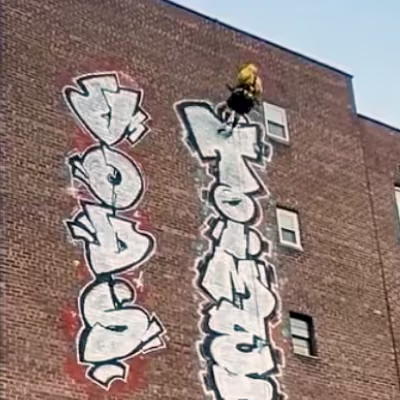
Graffiti Towers Cleanup Begins
Crews have started cleaning the notorious graffiti towers. The new owners ... Read More
This store requires javascript to be enabled for some features to work correctly.


All You Need To Succeed In
Graffiti Removal & Surface Protection


So, you’ve got your Starter Pack, you’ve read the book, eaten the pie, got the T-shirt, and now you’re ready to start making money. How are you going to charge for this sort of service?
To price graffiti removal, measure the affected area and apply a square-foot rate, subject to a minimum call-out charge. Allow for the surface, graffiti type, travel, setup, and additional product required.
Graffiti removal is actually fun, and when you are doing something you love, then it is never work. This makes things tricky when figuring out how to charge for jobs. You need to use your discretion, which gets easier with experience.
Today, most contractors balance hourly or per-job pricing with a square-foot model. Apps and digital quoting tools now make it easy to measure jobs and provide quick, transparent estimates. Many also offer service agreements for ongoing maintenance, especially for property managers and municipalities.
Here are a few pointers which should help guide you in the right direction:
Firstly, graffiti removal is a skill/trade that is learned and honed over time and requires specialized products and equipment. Don’t be afraid to charge accordingly, but be mindful not to charge clients like it’s your first and last job either.
Remember: once you take your hat and coat off to work, you will never get rich quickly. However, you can still earn a fabulous living using our advice.
Good and reasonable work often results in a referral, and there is always the likelihood that recurring graffiti will have them back on the phone to you in the future.
Become a friend in the trade to everyone. When using our system, aim to keep product costs at or below 10% of the total job price, allowing for your time, equipment, and other business costs. Actual product costs will vary depending on the surface and graffiti involved.
Although it may initially seem simpler to break jobs down into time and material, we recommend having a ballpark rate in square footage.
For illustration, a rate of $3 per square foot can serve as a starting point for a pricing example, not a standard rate for every job or region. Set your actual rate according to your costs and the work involved. If extra product is required, you will have to add this to the total. Always include your travel and setup time in your call-out fee.


Developing a square-foot rate is helpful to you and your customer. It helps your customer by making the cost more predictable. It also helps you, as with a little practice, you’ll be in and out of jobs very quickly and often short-changing yourself with your old time-and-materials formula. It can also ultimately help you in employing someone else to do the work with you in the long term.
Digital quoting tools or estimating apps can help you measure graffiti areas from photos or site maps when a reliable scale or verified dimensions are available. A photo alone does not establish square footage. Pairing this with before-and-after photos in your reports not only justifies your rates but builds trust and repeat business.
If you intend on taking our advice in billing by the square foot, you need to have a standard call-out fee, which may include the first several square feet—for example, 10 square feet. This will vary depending on the travel distance involved. A $90 call-out fee within 5 miles of your base is an example, rather than a recommended minimum for every contractor. Calculate your minimum from your actual travel, setup, labor, equipment, product, and overhead costs.
Using that example, the first 10 square feet would be included in the $90 call-out fee. The next 10 square feet could be $30, and each additional 10-square-foot block could be $25. Clearly explain how partial blocks are charged. This way, the client will know exactly how much to expect before you arrive and avoid any unwanted arguments.
Customers appreciate transparency. Clearly list your minimum call-out fee and travel range on your website or quote forms. If you service larger areas, consider adding a fuel surcharge or tiered travel-zone pricing.
Remember that filled-in bubble writing, multiple tags on top of each other, or graffiti on previously sand/soda-blasted surfaces can significantly add to the time and product required. For example, your rate may need to double on filled-in bubble writing or spray-can mural removal. You may also need to reduce your rate for jobs which require a color match and a paint-over, as you may be bidding against professional painters.
Jobs on historic buildings are worth a lot more because of the boffins and regulatory authorities. Be warned: they can require significantly more time, testing, and specialist oversight. If you don’t win them, then nothing is lost except prestige in your trade. However, bad business is worse than none at all.
For historic and government properties, make sure to follow environmental and heritage protection guidelines. Using our EPA-compliant, biodegradable removers and proper wastewater containment can help you qualify for higher-value municipal or state contracts.
Pro Tip! Build your local reputation online. A Google Business Profile, photos of your results, and short videos of your process help clients find you and trust you before they call. Partnering with cities, schools, and HOA boards can also provide long-term recurring contracts.
Products mentioned in this article, including related graffiti removal products, tools, and surface protection solutions.

$155.00
View More
$399.00
View More
$425.00
View More